
Quick answer: I think AI assistants will turn choosing a dentist from scrolling a list into accepting a shortlist. A patient will describe what they need, the assistant will name two or three practices, and most patients will pick from those. Over the next five years, the practices that win won’t be the best ranked. They’ll be the easiest for AI to recommend with confidence.
Key takeaways
- My position: the next five years of dental marketing are about making the AI shortlist, not about ranking position. Being known to AI is not the same as being recommended by it.
- Patients already use AI to choose healthcare providers. A rater8 survey reported by TechTarget in June 2026 found 47% of patients had used AI to find a new provider, up from 31% at the end of 2025.
- Thrive Agency’s October 2026 study found AI engines could describe 77% to 81% of the 372 businesses it tracked, but recommended only 9% to 16% of them. It did not test dental practices specifically.
- OpenAI launched Businesses in ChatGPT on November 10, 2026, which tells me ChatGPT now treats local businesses as something it needs verified data about.
- What I’d do now: make your practice facts identical everywhere, answer the specific questions patients ask, keep reviews coming in, and claim your listings on every AI platform that offers it.
What do I mean by “patients asking ChatGPT about dentists”?
By patients asking ChatGPT about dentists, I mean people using an AI assistant, such as ChatGPT, Gemini, Claude or Perplexity, to research or pick a dental practice. Instead of typing “dentist near me” into Google, they describe their situation in a sentence and ask the assistant who they should see.
The questions look different from search queries. A search query is a few words. A question to an assistant carries context: the treatment, the worry, the budget, the insurance, the location and sometimes the timing. Something like “I need an implant, I’m nervous about pain and I live on the north side of town, who should I see?” is a normal thing to ask an assistant and a strange thing to type into a search box.
That difference matters, because an assistant answering a detailed question doesn’t hand back ten blue links. It hands back an opinion, usually with a few names attached. I’ve written about how patients started asking AI chatbots much more specific questions, and this post is about where I think that leads.
Are patients really using AI to choose healthcare providers?
Yes, and faster than most practice owners assume. Survey data from 2026 shows close to half of patients have used AI to look for a new healthcare provider, and a growing share say AI influenced who they chose. These surveys cover healthcare providers in general rather than dentists, but I don’t see why dental patients would behave very differently.
The clearest numbers I’ve found come from rater8’s 2026 Patient Choice Report, as reported by TechTarget in June 2026:
- 47% of patients had used AI to find a new provider, up from 31% at the end of 2025.
- 36% said AI influenced their care decision, slightly ahead of Google search results at 34%.
- Use was highest among patients aged 45 to 60, at 64%, compared with 28% of those aged 18 to 29.
- Two-thirds of the 465 respondents who had used AI to research a provider said they had run into incorrect provider information, such as a wrong address, phone number, insurance detail or office hours.
- 60% said they trust AI summaries without checking them.
Two of those numbers stand out to me. The 45 to 60 age group is exactly the group that tends to need implants, crowns and other larger treatment. And the error rate is a warning: patients are trusting answers that are often wrong about basic practice details. That is a problem a practice can fix, and most haven’t.
What does the latest AI visibility research tell me?
The latest research tells me that AI tools know about far more businesses than they recommend. Thrive Agency’s October 2026 study found that four AI engines could describe most of the businesses it tracked but put very few of them on a recommendation list. Being known is easy. Being recommended is rare, and that gap is where I think the next five years get decided.
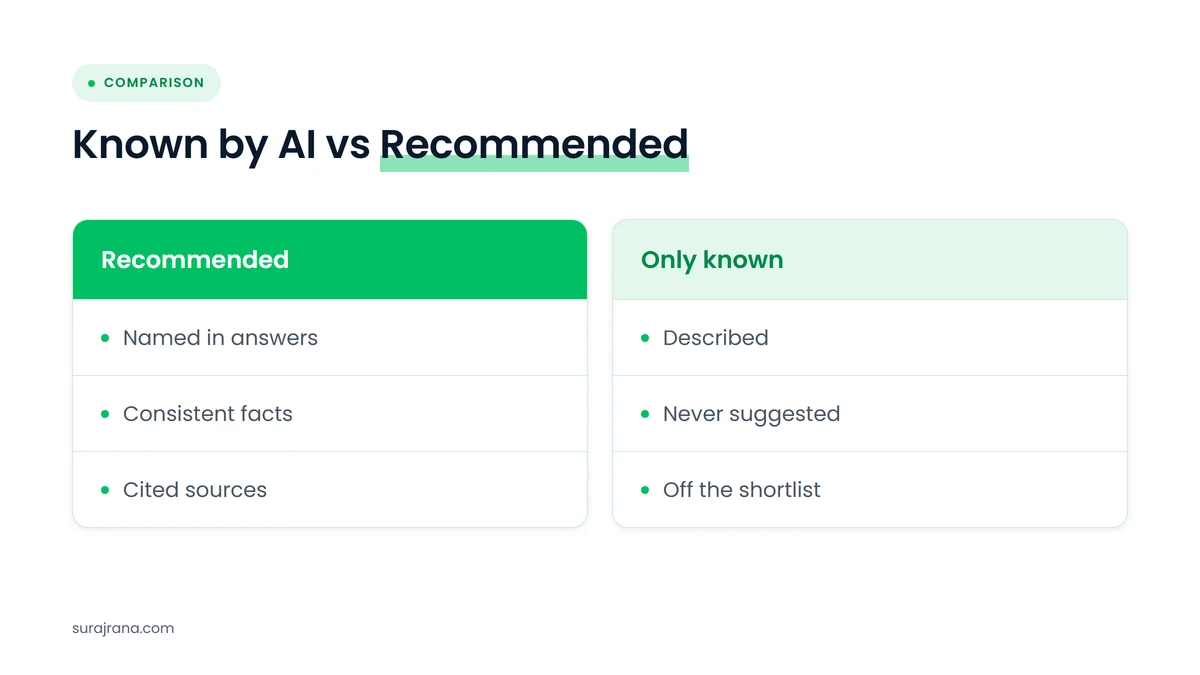
Thrive Agency’s Business Visibility Index, Volume 3, published on October 29, 2026, tracked 372 businesses across legal, medical, restoration, home services and franchise categories, including 80 medical practices. It tested Perplexity, ChatGPT, Gemini and Claude. The findings I keep coming back to:
- Each engine could describe 77% to 81% of the businesses, but recommended only 9% to 16%.
- 287 of the 372 businesses (77%) didn’t make any engine’s recommendation list.
- Only 21 businesses were recommended by all four engines, and 10 of those were medical practices.
- Perplexity named about two businesses per buying answer, while Claude named about eight.
Two caveats. The study doesn’t cover dental practices specifically, so I’m reading across from medical practices, which are the closest category it measured. And the authors say their findings show associations, not proven causes. Even so, the shape of the result matches what I expect: when an assistant names only a handful of options, the gap between “known” and “chosen” becomes the whole game.
How do I think AI assistants will change how patients choose a dentist?
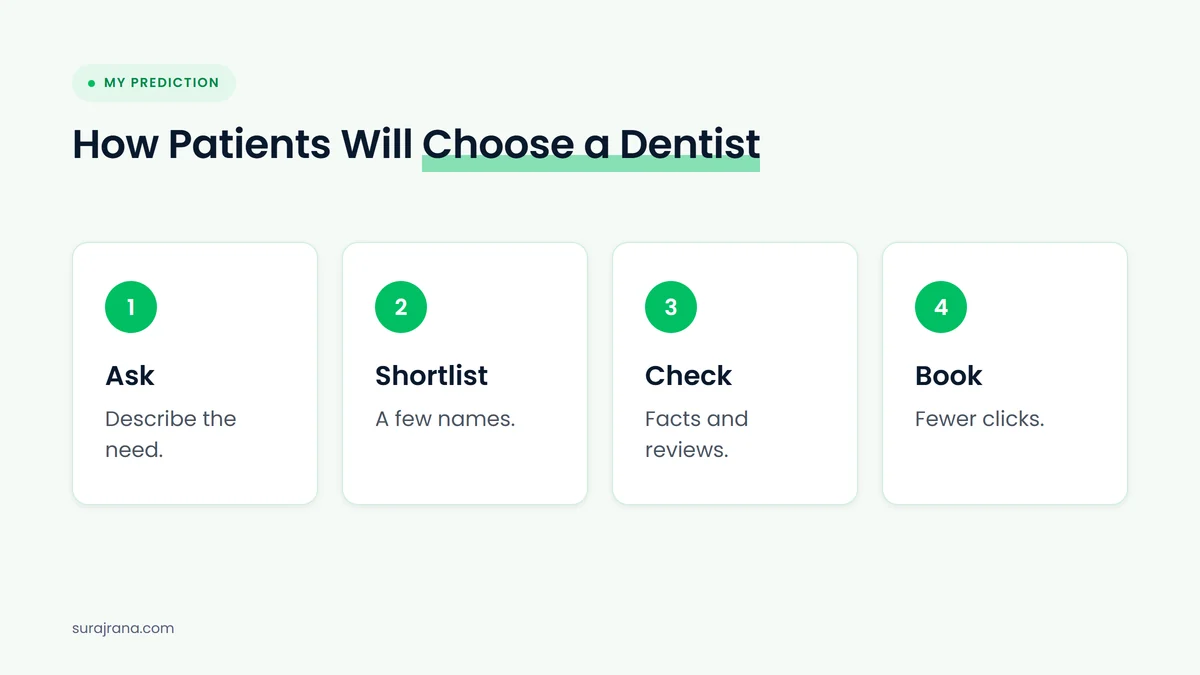
I think AI assistants will change how patients choose a dentist in four ways over the next five years: the list becomes a shortlist, the assistant checks facts before it recommends, more of the decision happens inside the assistant, and practices will manage AI listings the way they manage Google Business Profile today. These are my predictions, not certainties.
Will the list of options get shorter?
Yes, I think it will. A search results page shows a map pack, ads and ten organic results, and a patient can scroll past all of them. An assistant answering a question names a few practices and explains why. If you’re not one of those few, the patient may never know you exist, even if you rank well on Google.
The Thrive data already shows this. An engine that names about two businesses per answer leaves no room for the practice in fourth place. That’s why I don’t think “page one” will mean much to patients asking AI. The useful question becomes: are you in the answer?
Will AI check a practice’s facts before recommending it?
I believe it will, more and more. An assistant that sends a patient to a practice with the wrong phone number or closed hours makes itself look bad. So I expect assistants to favor practices whose name, address, phone, hours, services and insurance details match across their website, Google, directories and their own AI listings.
The rater8 finding that two-thirds of AI users had met incorrect provider information is the reason I’m confident about this direction. The AI companies know accuracy is their weak spot. I’ve argued before that brand consistency decides whether AI recommends your dental clinic, and I think that becomes more true, not less.
Will patients book without ever visiting a practice website?
For some patients, I think so. Today most people still click through to a website or call. Over five years, I expect assistants to handle more of the comparison, the questions and possibly the booking step themselves. The website won’t disappear, but it will become the source the assistant reads more than the page the patient reads.
That has a practical consequence. Your website needs to state clear, specific answers an assistant can lift: who you treat, what each treatment involves, how costs are structured, what insurance you accept and when you’re open. A vague page gives the assistant nothing to recommend.
Will practices manage AI listings like a Google Business Profile?
Yes, and it has already started. On November 10, 2026, OpenAI launched Businesses in ChatGPT in beta, with a Business Hub where a business can claim its listing, update its details and see mentions and website clicks. That is the first version of what Google Business Profile became for local search.
It’s early. OpenAI’s help page says local businesses can currently claim only an existing US listing, and that claiming doesn’t by itself make ChatGPT show a business more often. Search Engine Roundtable’s coverage notes that a recorded click doesn’t confirm a website visit or a conversion. But I’d bet that within five years, claiming and maintaining your AI listings will be as routine for a practice as keeping its Google profile current.
How will choosing a dentist today compare with five years from now?
Today a patient searches, scans the map pack, reads reviews and clicks a few websites before calling. In five years, I expect many patients to describe their need to an assistant, get a short list with reasons, check one or two details and book. This table is my prediction, not a measured trend.
| Step | How most patients choose today | How I expect many will choose in five years |
|---|---|---|
| Starting point | A short search like “dentist near me” | A full sentence describing the need, budget and worries |
| Options shown | Map pack, ads and ten organic results | Two to eight named practices, with reasons |
| Who compares | The patient, tab by tab | The assistant, before the patient sees anything |
| What gets checked | Star rating and a quick look at the website | Consistent facts, specific services, reviews and insurance |
| Role of the website | The page the patient reads | The source the assistant reads |
| What the practice manages | Website and Google Business Profile | Website, Google profile and AI platform listings |
| What “winning” means | Ranking on page one | Being named in the answer |
What won’t change for dental practices?
Plenty won’t change. Patients will still want a practice near them, with good reviews, friendly staff and fair prices. I expect Google to remain a major source of patients for years, and assistants draw on the same reviews, listings and practice websites. AI changes who does the comparing, not what patients care about.
The rater8 data supports this. Family and friends, insurance websites and online review sites were still among the most influential sources, and 55% of patients said they had avoided a provider or canceled an appointment because of online reviews. AI assistants read those same reviews. A practice with weak reviews won’t be rescued by AI visibility work.
I also don’t think the map pack disappears overnight. I’ve written about whether Google AI Mode will replace the local map pack, and my answer there still stands: local results evolve, they don’t vanish.
What would I do now if I owned a dental practice?
If I owned a dental practice, I’d prepare for the AI shortlist now, while most competitors aren’t. I’d fix inconsistent practice details, answer the specific questions patients ask on my own website, keep a steady flow of honest reviews, and claim every AI listing available to me. None of this is exotic. It’s good local SEO done properly.
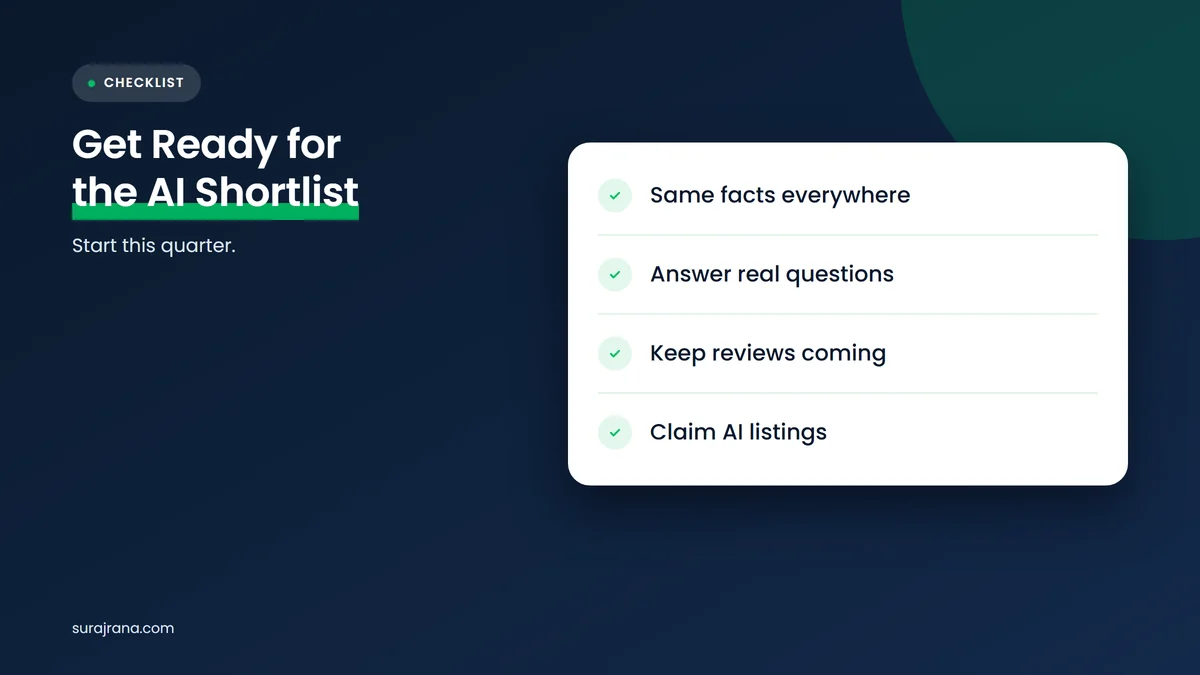
- Make your facts identical everywhere. Check your practice name, address, phone, hours, dentists and services on your website, Google Business Profile and the main directories. Fix every mismatch.
- Answer real questions on your own pages. Treatment pages that explain who it suits, what it involves, how long it takes and how costs work give an assistant something to quote. Dental Master Media has a guide on writing dental service pages that AI search will cite.
- Keep reviews coming in. Ask every happy patient, reply to every review, and never use generic AI replies that say nothing.
- Claim your AI listings. If you’re a US practice with an existing listing in ChatGPT, claim it. Dental Master Media explains how dental practices can claim their ChatGPT listing step by step.
Smaller practices have a real chance here. An assistant doesn’t care about ad budgets. It cares about clear, consistent, trustworthy information, which is why I think small dental practices can beat chains in AI search.
Where could I be wrong about this?
I could be wrong on timing, and I could be wrong on how far booking moves inside the assistant. Healthcare is cautious, AI answers still contain errors, and regulators may slow things down. Patients may also keep clicking through to check a practice themselves. I’m confident about the direction, less so about the speed.
Here’s the fair case against my view:
- Trust may stall adoption. If patients keep meeting wrong information, some may go back to Google and word of mouth.
- Google isn’t standing still. AI Mode and AI Overviews keep a lot of this behavior inside Google, where the map pack and Google Business Profile still matter.
- The surveys are early. Much of the provider-choice data comes from vendor surveys on general healthcare, not peer-reviewed research on dentistry.
- Recommendations shift. AI answers vary from one run to the next, so being named once doesn’t mean being named every time.
None of that changes what I’d do today. Consistent facts, specific answers and strong reviews help a practice in Google and in AI assistants, so the work pays off whichever way the next five years go.
Frequently asked questions
Do patients really use ChatGPT to find a dentist?
Some do, and the share is growing. Surveys in 2026 found close to half of patients had used AI to look for a healthcare provider. Those surveys cover healthcare in general rather than dentistry, but I’d expect dental patients to follow the same pattern, especially for larger treatments like implants.
Is ranking on Google still worth it if patients ask AI?
Yes. Google is still a major way patients find practices, and AI assistants draw on the same sources Google uses: websites, reviews and business listings. Good local SEO supports both. What changes is the goal, from ranking position alone to being the practice an assistant feels confident naming.
Can a dental practice pay to be recommended by ChatGPT?
Not as an organic recommendation. OpenAI says claiming a business listing doesn’t by itself make ChatGPT show the business more often. Recommendations depend on the information available about the practice. Advertising inside AI tools is developing separately, but it is not the same as being named in the answer.
What should a dental practice fix first for AI search?
Fix inconsistent practice details first. Your name, address, phone, hours, dentists and services should match across your website, Google Business Profile and directories. AI users often meet incorrect provider information, so accurate, consistent facts are the cheapest and fastest improvement most practices can make.
Will AI assistants replace dental websites?
I don’t think so. I think the website’s role changes. It becomes the source an assistant reads to understand your treatments, prices, insurance and hours, rather than only the page a patient browses. Clear, specific pages matter more in that world, not less.
My bottom line on AI and patient choice
I think the next five years will reward the practices that AI can recommend with confidence, not the ones with the biggest marketing budgets. The shortlist is coming, and being known isn’t enough to make it. Consistent facts, specific answers, honest reviews and claimed listings are what move a practice from known to chosen.
If you want help getting there, read about my dental SEO services on Suraj Rana‘s site, or see why ChatGPT may recommend another dentist instead of your practice on Dental Master Media.
Want to know if AI would recommend your practice?
I’m Suraj Rana. Through my dental SEO services and Dental Master Media, my team and I help dental practices get their facts, pages and reviews in shape for Google and for AI assistants. If you’d like a straight view on where your practice stands, I’m happy to look at it with you.
Sources
- Thrive Agency (Jimi Gibson), “Business Visibility Index: Volume 3, Q3 2026”, October 29, 2026. https://thriveagency.com/news/volume-3-business-visibility-index/
- TechTarget Patient Engagement (Sara Heath), “Almost half of patients use AI for online provider search”, June 3, 2026. https://www.techtarget.com/patientengagement/news/366643954/Almost-half-of-patients-use-AI-for-online-provider-search
- OpenAI Help Center, “Setting up your business on ChatGPT”, November 2026. https://help.openai.com/en/articles/20001635-setting-up-your-business-on-chatgpt
- OpenAI, “Introducing Businesses in ChatGPT”, November 10, 2026. https://openai.com/index/introducing-businesses-chatgpt/
- Search Engine Roundtable (Barry Schwartz), “Businesses in ChatGPT Business Hub Live With Click Data”, November 10, 2026. https://www.seroundtable.com/chatgpt-business-hub-42505.html

My name is Suraj Rana, and I am a seasoned Dental SEO Expert with extensive experience in the Dental SEO industry. Leveraging my deep knowledge and expertise, I help dental practices enhance their online visibility and attract more patients.