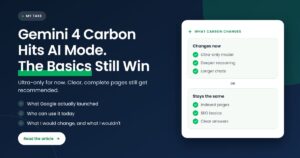

Quick answer: No, not today. Gemini 4 Carbon reached AI Mode on November 10, 2026, but only for Google AI Ultra subscribers who pick it in the model selector, so most searchers won’t meet it yet. My take: it doesn’t change the basics. It does show where AI Mode is heading, and that direction rewards businesses whose pages answer the follow-up questions, not just the first one.
Key takeaways
- Google released Gemini 4 Carbon on November 10, 2026, and is rolling it out to Google AI Ultra subscribers in Google Antigravity, the Gemini app and AI Mode in Search.
- In AI Mode, Carbon is a choice in the model selector for paying Ultra subscribers. It is not the model most people get when they search.
- Google’s Search leads describe the gains as deeper reasoning, better instruction following, better understanding of intent and deeper back-and-forth conversations.
- Google’s own guidance says there are no special optimizations needed to appear in AI Mode. That hasn’t changed with a new model.
- My opinion: the trend matters more than this launch. As AI Mode handles longer, more detailed conversations, vague pages will lose ground to pages that answer the next question too.
What did Google actually launch?
Google released Gemini 4 Carbon on November 10, 2026, calling it its strongest model, with frontier performance in cybersecurity and long, multi-step agentic work. For consumers, it is rolling out to Google AI Ultra subscribers in three places: Google Antigravity, the Gemini app and AI Mode in Google Search.
The announcement came from Koray Kavukcuoglu, Google DeepMind’s SVP and Google’s Chief AI Architect. He positions Carbon above Gemini 4 Argon, which Google describes as the right choice for most knowledge work, while Carbon is meant for harder problems and spends more effort reasoning and checking its work. Carbon had first gone to cybersecurity defenders through Google’s Fairwind Program about two weeks earlier.
The launch also covers developers and businesses through the API, but that part matters less for this post. What matters for search is the line about AI Mode. Barry Schwartz at Search Engine Roundtable confirmed that paid subscribers can pick Carbon in the AI Mode model selector, and Robby Stein, who leads product for Google Search, announced it on X:
“Shipping Gemini 4 Carbon in Search today for Google AI Ultra subs!”
Robby Stein (@rmstein) on X, November 10, 2026 (source)
What is Gemini 4 Carbon?
Gemini 4 Carbon is Google’s most capable Gemini 4 model, announced for general access on November 10, 2026. Google says it is built for harder, longer tasks such as complex analysis, multi-step coding and security work. In AI Mode, it is an optional model for Ultra subscribers, not a replacement for what everyone else sees.
Two terms in the title are worth defining plainly:
- AI Mode is the conversational search experience inside Google Search, where you ask a question, get an AI-written answer with links and can keep asking follow-ups.
- Google AI Ultra is Google’s top paid AI subscription. It sits above Google AI Pro.
Google’s announcement includes a lot of benchmark claims, mostly about coding, agents and cybersecurity. Those are Google’s own reported results, and none of them are about local search or business recommendations, so I’m not going to read anything about SEO into them.
What did Google’s Search leads say Carbon changes in AI Mode?
Google’s Search leads framed Carbon around harder questions and longer conversations. Robby Stein said deeper reasoning and better instruction following will give more helpful responses for the toughest questions in AI Mode. Rajan Patel said Carbon better understands intent, so people can have deeper back-and-forth conversations in AI Mode.
Both comments were posted on X and collected by Search Engine Roundtable. Notice what they don’t say. Neither mentions how sources are chosen, how links appear or whether anything changes for websites. The pitch is entirely about the searcher’s experience: more complex questions, better understood, over a longer conversation.
Early testers are impressed. Glenn Gabe, who tried Carbon through the Gemini app’s early access program, put it bluntly:
“It’s insanely powerful.”
Glenn Gabe (@glenngabe) on X, November 10, 2026 (source)
I take that as a fair signal about the model. It is not a signal about search traffic. A model can be far more capable and still send the same number of people, or fewer, to your website.
Who can use Gemini 4 Carbon in AI Mode right now?
Right now, only Google AI Ultra subscribers can use Gemini 4 Carbon in AI Mode, and only if they select it from the model menu. Everyone else keeps using AI Mode as before. For a dental practice or a local business, that means very few of your potential customers are seeing Carbon’s answers today.
This follows a pattern Google set a month earlier. On October 13, 2026, Search Engine Journal reported that Gemini 4 Argon was added to AI Mode’s model menu for Google AI Pro and Ultra subscribers, and noted that nothing announced that day changed the default for free AI Mode users. Here is how the two launches compare, based only on what Google and the trade press reported:
| Model | Reached AI Mode | Who can choose it | How Google described it |
|---|---|---|---|
| Gemini 4 Argon | October 13, 2026 | Google AI Pro and Ultra subscribers, through the model menu | Big improvements on nuanced, multi-step tasks |
| Gemini 4 Carbon | November 10, 2026 | Google AI Ultra subscribers only, through the model selector | Deeper reasoning, better instruction following, better intent understanding, deeper back-and-forth |
| Free AI Mode | Not changed by either launch, as reported | Everyone | No new model announced |
Whether Argon or Carbon ever becomes the default for everyone is not something Google has said. Search Engine Journal called that unclear for Argon, and I’d say the same for Carbon. I wouldn’t plan around a date nobody has announced.
Does Gemini 4 Carbon change how businesses should approach SEO?
No, not on its own. Google says there are no extra requirements or special optimizations to appear in AI Overviews or AI Mode, and that normal SEO best practices still apply. A new model behind an Ultra paywall doesn’t change that. What it changes is the kind of conversation AI Mode is being built to handle.
Google’s “AI features and your website” page is clear on the mechanics. To be shown as a supporting link, a page has to be indexed and eligible to appear in Search with a snippet. AI Mode may run several related searches across subtopics to build a response, which can surface a wider range of pages than a classic results page. None of that is specific to one model.
So my honest advice to practice owners and agency owners is boring: don’t change your strategy because of this launch. Be wary of anyone who suddenly sells “Gemini 4 Carbon optimization”. I’ve written before about why ranking promises are a red flag, and a package built around a model that most searchers can’t use yet belongs in the same bucket.
Why do I still think this launch matters?
I think it matters because it shows the direction, not the destination. Each model Google adds to AI Mode is pitched on handling harder questions and longer conversations. If that becomes normal for every searcher, the businesses that get recommended will be the ones whose pages can answer the second, third and fourth question.
This part is my opinion, not something Google has said. Think about how a person might use a model that is pitched on understanding intent better and holding a deeper back-and-forth conversation. They won’t stop at “dentist near me”. They might ask which practices nearby offer sedation, then which of those take their insurance, then whether any can see them on a Saturday, then what an implant might cost. Each follow-up narrows the list.
A model that reasons more carefully can only work with what it can find. If your website says “we offer a full range of services” and nothing else, there is nothing to reason with. If your pages state who a treatment is for, how it works, rough costs or how pricing is set, insurance details and opening hours, the model has material it can use at every step. That is the same point I made about your Google Business Profile services list deciding whether AI recommends you, just applied to the whole conversation.
Which businesses could get recommended more in deeper AI Mode conversations?
In my view, businesses with complete, specific and consistent information are best placed. Deeper conversations mean more chances to be filtered out. A business that clearly answers cost, suitability, availability and trust questions gives a reasoning model a reason to keep it in the shortlist. A vague one gives it a reason to drop it.
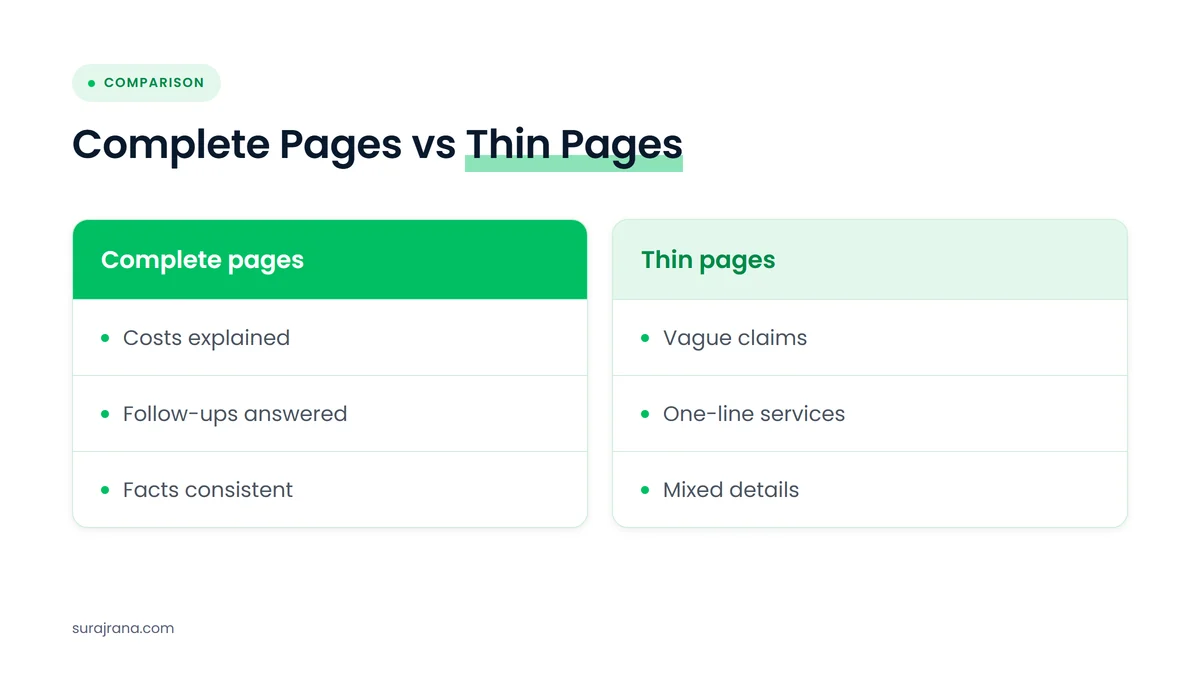
Here is how I’d sort the two kinds of business. Again, this is my reading of the direction, not a measured result:
| What the searcher asks next | Business that stays in the answer | Business that drops out |
|---|---|---|
| “Is this right for me?” | Treatment pages explain who it suits and who it doesn’t | One-line service lists |
| “What will it cost?” | Clear price ranges or an honest explanation of what affects price | “Call us for a quote” and nothing else |
| “Can they see me soon?” | Hours, emergency policy and booking options stated plainly | Hours that differ between the website and the Business Profile |
| “Can I trust them?” | Named dentists, real credentials, steady reviews | No names, no faces, no detail |
I made a similar case when I wrote that vague dental pricing pages are losing you patients. Smarter AI models don’t make that problem smaller. If anything, they make it easier for a system to notice what is missing.
What would I do differently after this news?
I wouldn’t do anything dramatic. I would keep doing the fundamentals, then check whether the most important pages can survive a longer conversation. That means answering the follow-up questions real customers ask, keeping facts identical everywhere and testing a few multi-step questions in AI Mode yourself to see what comes back.

- List the follow-up questions. Ask your front desk or sales team what people ask after their first question. Cost, insurance, timing and suitability come up again and again.
- Answer them on the page that matters. Put those answers on the relevant treatment or service page, in plain text, not hidden in a PDF or an image.
- Make your facts match everywhere. Hours, services, names and phone numbers should be the same on your website, Business Profile and directory listings.
- Test a real conversation. In AI Mode, ask a question the way a customer would, then keep asking follow-ups. Note where your business appears and where it drops out.
- Report on outcomes, not models. Track calls, bookings and enquiries. A model launch only matters if it moves those numbers.
If you want the bigger picture on where AI Mode is heading, I covered Google putting AI Mode on the normal results page, which affects far more searchers than a model only Ultra subscribers can pick.
Is your website ready for longer AI Mode conversations?
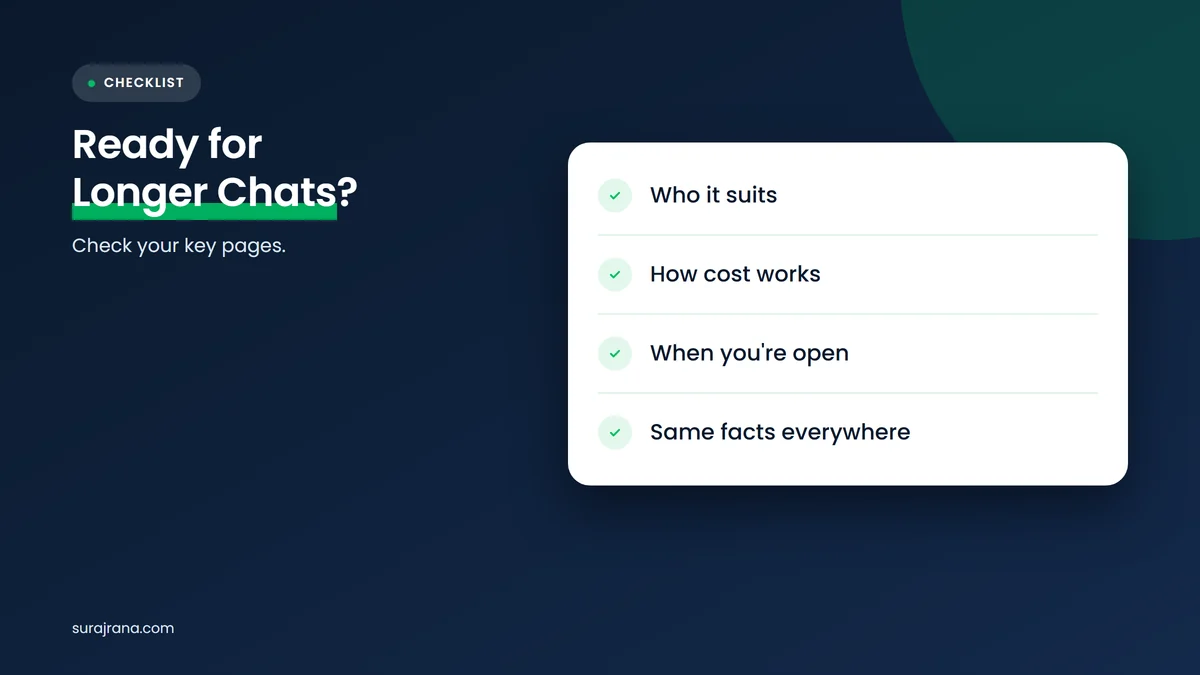
Your website is ready if your key pages explain who each service is for, how cost works, when you’re available and why someone should trust you, and if those facts match your Business Profile. If a page only works for the first question, it probably won’t hold up when a searcher keeps asking.
For agency owners, this is a useful conversation to have with clients right now. The launch is in the news, clients may ask about it, and the honest answer is a good one: nothing urgent has changed, but here is the work that makes a business easier to recommend in any version of AI Mode. That is more useful than a scare story.
Frequently asked questions
When did Gemini 4 Carbon come to AI Mode?
Google released Gemini 4 Carbon on November 10, 2026, and began rolling it out the same day to Google AI Ultra subscribers in Google Antigravity, the Gemini app and AI Mode in Search. In AI Mode, subscribers choose it from the model selector.
Can free Google users use Gemini 4 Carbon in AI Mode?
No. As of the November 10, 2026 launch, Gemini 4 Carbon in AI Mode is for Google AI Ultra subscribers only. Google has not announced whether or when it will reach Google AI Pro or free users.
Do I need to optimize my website for Gemini 4 Carbon?
No. Google says there are no additional requirements or special optimizations needed to appear in AI Overviews or AI Mode, and that normal SEO best practices still apply. Pages must be indexed and eligible to show with a snippet. That is true whichever model a searcher uses.
What is the difference between Gemini 4 Argon and Gemini 4 Carbon?
Google describes Argon as the right choice for most knowledge work and coding, while Carbon is its strongest model for harder problems and spends more effort reasoning. In AI Mode, Argon reached Pro and Ultra subscribers on October 13, 2026, and Carbon reached Ultra subscribers on November 10, 2026.
Will Gemini 4 Carbon change which businesses AI Mode recommends?
Google hasn’t said it will. My opinion is that models built for deeper reasoning and longer conversations will favor businesses with complete, specific and consistent information, because each follow-up question gives a vague business another chance to drop out of the answer.
My bottom line on Gemini 4 Carbon in AI Mode
Gemini 4 Carbon in AI Mode is real news, but it is news for Ultra subscribers, not a reason to rebuild your SEO. Google’s own guidance still says the basics are what count. What I take from it is the direction: AI Mode is being built for longer, harder conversations, and the businesses that answer the next question will be the ones still standing at the end of them.
So keep doing the fundamentals, and make your most important pages complete enough to hold up when a customer keeps asking. That is how I approach dental SEO for practices, and it is what my team does through Dental Master Media’s dental SEO services. You can read more about my work on surajrana.com.
Want to know if your pages hold up in a longer AI conversation?
I’m Suraj Rana. If you’re wondering how your practice or your clients show up when someone keeps asking AI Mode follow-up questions, I’m happy to look at it with you and tell you what I’d fix first. Through my dental SEO work and Dental Master Media, my team and I help practices become the obvious answer.
Sources
- Google, The Keyword (Koray Kavukcuoglu), “Gemini 4 Carbon is now available”, November 10, 2026. https://blog.google/innovation-and-ai/models-and-research/gemini-models/gemini-4-carbon-now-available/
- Search Engine Roundtable (Barry Schwartz), “Gemini 4 Carbon Available In Google Search AI Mode”, November 10, 2026. https://www.seroundtable.com/gemini-4-carbon-google-search-ai-mode-42502.html
- Search Engine Journal (Matt G. Southern), “Google Adds Gemini 4 Argon To AI Mode For Pro & Ultra Subscribers”, October 13, 2026. https://www.searchenginejournal.com/google-gemini-4-argon-ai-mode/592806/
- Google Search Central, “AI features and your website”, last updated December 10, 2025. https://developers.google.com/search/docs/appearance/ai-features
- Robby Stein (@rmstein) on X, post on Gemini 4 Carbon in Search, November 10, 2026. https://x.com/rmstein/status/2120191281200766998
- Glenn Gabe (@glenngabe) on X, post on testing Gemini 4 Carbon, November 10, 2026. https://x.com/glenngabe/status/2120195911175254316

My name is Suraj Rana, and I am a seasoned Dental SEO Expert with extensive experience in the Dental SEO industry. Leveraging my deep knowledge and expertise, I help dental practices enhance their online visibility and attract more patients.