
Quick answer: Google is now showing pop-ups in AI Mode that ask people to turn on Personal Intelligence and connect their Google apps. My take: the more AI Mode tailors answers to each person, the less a single “ranking” means. Brand, reviews and being the obvious choice matter more, and reporting should move from positions to leads.
Key takeaways
- My position: personalized AI Mode turns “where do we rank?” into the wrong question. The better question is whether people already know, trust and choose you.
- Search Engine Roundtable reported on November 6, 2026 that AI Mode shows a pop-up titled “Supercharge Search with Personal Intelligence”, nudging users to opt in and connect more apps.
- Personal Intelligence lets AI Mode use context from apps such as Gmail and Google Photos. Google says it is opt-in and can be turned off at any time.
- It started in January 2026 for paying US subscribers. By May 2026, Google said it was available in AI Mode in nearly 200 countries and territories, with no subscription needed.
- Google’s own examples show recommendations shaped by past purchases and bookings. That rewards businesses people already have a relationship with.
- What I’d change now: report on calls, bookings and form fills first, and treat rank tracking as a rough health check, not the scoreboard.
What did Google change with Personal Intelligence in AI Mode?
Google started actively prompting AI Mode users to switch on Personal Intelligence. A pop-up headed “Supercharge Search with Personal Intelligence” invites people to continue and set it up, which also connects more of their Google apps. The pop-up says this makes Search “uniquely yours” and that the setting can be changed at any time.
Barry Schwartz at Search Engine Roundtable reported the pop-up on November 6, 2026, after Sachin Patel spotted it and wrote it up for Search Engine Watch. According to the report, the pop-up says the user’s info stays protected, and turning on Personal Intelligence also turns on connected apps inside AI Mode. Barry noted that people can still use Personal Intelligence without connecting content apps, and said the pop-up felt “a bit extreme” to him.
The feature itself isn’t new. What’s new is the push. Google has moved from “this is available if you look for it” to “here’s a prompt in the middle of your search.” When a company starts asking you to opt in, it usually wants a lot more people opted in.
What is Personal Intelligence in Google AI Mode?
Personal Intelligence is a Google feature that lets AI Mode use your own context, such as emails in Gmail and pictures in Google Photos, to tailor its answers. Instead of giving everyone the same response, AI Mode can factor in your bookings, purchases and preferences. Google describes it as opt-in, with connections you can turn on or off.
Google announced Personal Intelligence in AI Mode on January 22, 2026. Robby Stein, VP of Product for Google Search, gave examples that matter for any business owner. One was AI Mode suggesting a new style from a sneaker brand the user had already bought from. Another used a hotel booking found in Gmail to suggest activities near the trip. Google also said AI Mode doesn’t train directly on your Gmail inbox or Photos library, and admitted it can sometimes misread context.
It sits next to a newer idea, connected apps. On October 28, 2026, Google launched a preview of its Connected Apps Platform so developers can build apps that work inside Search and the Gemini app. Google’s help page on Connected Apps lists examples such as Instacart, Canva and YouTube Music, available in AI Mode in the US in English for now.
How fast has Personal Intelligence spread?
Quickly. It went from a paid, US-only Labs experiment in January 2026 to free US users in March, then to AI Mode in nearly 200 countries and territories by May, according to Google. Now Google is prompting people inside AI Mode to turn it on. That is a clear direction, not a side project.
| Date | What happened | Source |
|---|---|---|
| January 22, 2026 | Personal Intelligence comes to AI Mode for Google AI Pro and Ultra subscribers in the US, in English, with Gmail and Google Photos | Google blog |
| March 17, 2026 | Expands to US users of AI Mode without a paid plan, personal accounts only | Google blog |
| May 19, 2026 | Google says it is in AI Mode in nearly 200 countries and territories across 98 languages, with no subscription, and Calendar coming | Google blog (I/O) |
| October 28, 2026 | Connected Apps Platform preview lets developers build apps for Search and Gemini | Google blog |
| November 6, 2026 | AI Mode pop-ups push users to turn on Personal Intelligence and connect apps | Search Engine Roundtable |
The dates come from Google’s posts on the March expansion and its May 2026 I/O Search update, where Elizabeth Reid, VP of Search, listed the wider rollout.
Why do I think personalization makes a single ranking less meaningful?
Because a ranking assumes everyone sees the same results. With Personal Intelligence on, two people asking AI Mode the same question can get different answers, shaped by their own emails, photos and history. A rank tracker checks from a neutral, logged-out view that no real, opted-in customer actually sees. The number still exists, but it describes fewer real searches.
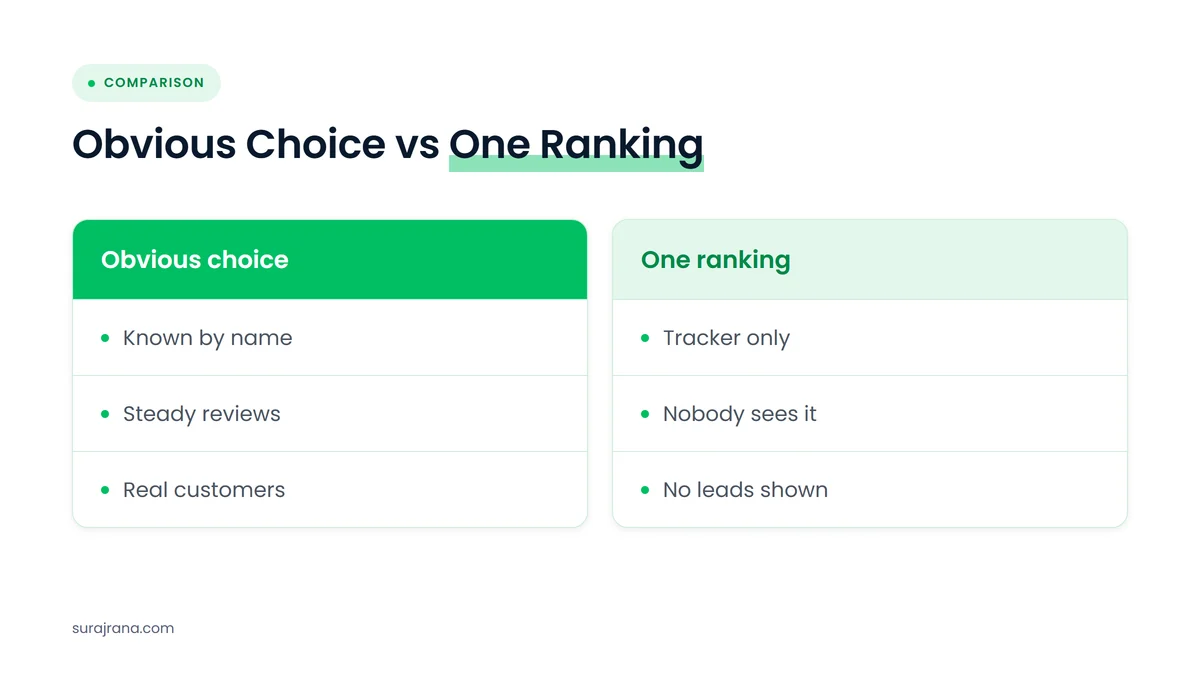
Rankings were already blurry. Location, device and search history have changed results for years, which is part of why I wrote about why I stopped selling keyword rankings. AI Mode then removed the neat list of ten links for many searches. Personal Intelligence goes one step further: the answer can depend on who is asking, what they bought last month and where they’re traveling.
So when someone tells me they’re “number three for dentist near me”, my honest reply is: number three for whom? For the rank tracker, yes. For a patient who already has your appointment reminder in Gmail, the answer could look quite different. I can’t prove exactly how Google weighs that context, and Google hasn’t published it. But its own examples point the same way.
Why do brand, reviews and familiarity matter more now?
Because Google’s own examples reward businesses the user already has a link with. AI Mode suggested a sneaker brand the person had bought from before and built plans around a hotel booking in their inbox. If personal context shapes the answer, the business that already appears in someone’s life has an advantage that no single keyword can buy.
This is my opinion, not a Google statement: I think personalized AI search rewards three things. First, people already knowing your name, so they search for you or recognize you. Second, a strong public reputation, because reviews and consistent business details are what an AI tool can check when it has no personal context to go on. Third, a real relationship with past customers, the kind that leaves confirmations, receipts and reminders in their apps.
None of that is new advice. It’s what good local businesses have always done. What changes is how much it counts compared with technical tweaks aimed at a position. I made a similar point in my take on AI Mode appearing on the normal results page: Google keeps adding new surfaces, and the businesses with clear, trusted information behind them hold up best.
What does this mean for how businesses report on SEO?
It means rankings should drop down the report and leads should move to the top. If no two searchers see the same answer, the most honest measure is what reached your business: phone calls, booking requests, form fills, direction requests and branded searches. Those numbers come from real people, so personalization doesn’t distort them.
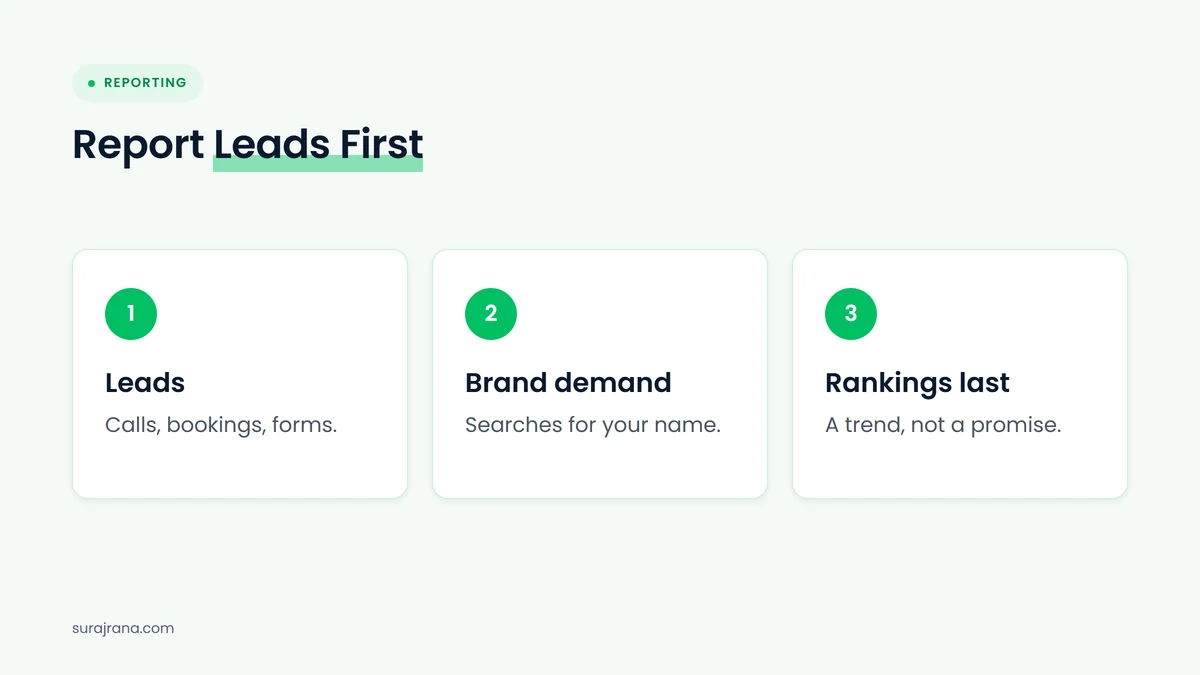
Here’s the reporting order I’d use for a practice or a small business today:
- Leads first. Calls, bookings and form submissions from organic search and the Business Profile, tracked month over month.
- Brand demand second. Searches for your business name in Search Console. If more people look for you by name, you’re becoming the obvious choice.
- Visibility third. Impressions and clicks in Search Console, which come from real searches rather than a simulated one.
- Rankings last. Still useful to spot a technical problem or a sudden drop, but read as a trend, not a promise of what customers see.
Agencies feel this most, because many client reports still open with a rankings table. I think that table will become harder to defend every time Google personalizes another part of Search. Changing the report now is easier than explaining later why “position two” didn’t bring in any calls.
What does this mean for dental practice owners?
For dentists, it means the patients you already have are part of how new and returning patients find you. A practice that sends clear confirmations and reminders, earns steady reviews and keeps its name and details consistent is easier for a personalized AI answer to recognize and recommend. A practice that only tracks one keyword misses that.
Dental care is local and repeat by nature. Patients come back for cleanings, recommend you to family and search for you by name. I think that suits personalized search well, as long as the practice makes itself easy to recognize. Dental Master Media has written in more depth about how Google AI Mode is reshaping local search for dental practices, which is worth reading alongside this.
I’d also be careful not to overreact. Google hasn’t said Personal Intelligence reads clinic emails to rank clinics, and medical topics may be handled differently. The point isn’t to game anyone’s inbox. It’s that the basics of a well-run, well-reviewed practice now carry more weight than a position on a tracker.
What doesn’t this news mean?
It doesn’t mean SEO stops working, and it doesn’t mean rankings are worthless. Personal Intelligence is opt-in, many people won’t turn it on, and plenty of searches still happen in the regular results. It also doesn’t mean you can, or should, try to get into people’s Gmail. There’s no setting a business can switch on to be “personalized in”.
It also doesn’t change Google’s core advice. Helpful pages, accurate business information and a good reputation still do the heavy lifting. What I’m arguing is narrower: as answers get more personal, the gap between “what the tracker says” and “what customers see” grows, and businesses should measure accordingly.
What would I check this month?
I’d check whether the business is easy to recognize, whether customers would happily name it, and whether reporting shows real leads. These checks cost little, need no special tool and make sense whether or not Personal Intelligence keeps spreading. They also give an owner a clearer picture than any single ranking.
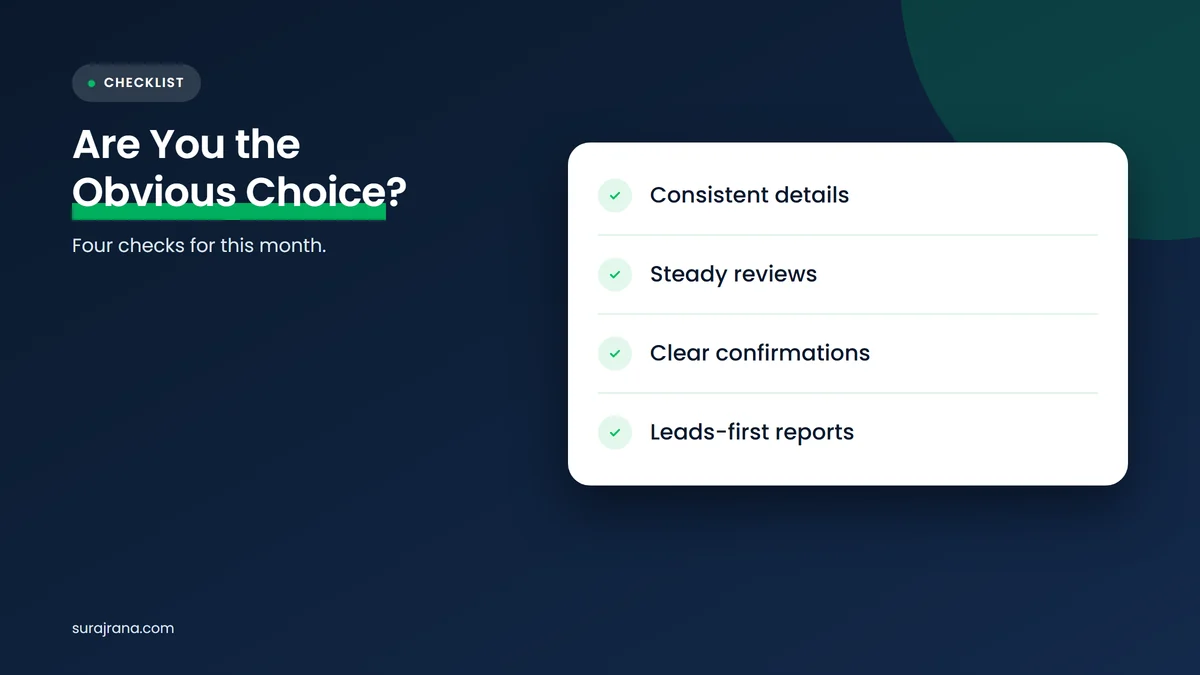
- Name and details: Is the business name, address, phone and website the same on your site, Business Profile and main listings?
- Reviews: Are new reviews arriving steadily, and are you replying to them in your own words?
- Customer touchpoints: Do bookings and visits produce clear confirmations and follow-ups under your real business name?
- Reporting: Does your monthly report lead with calls, bookings and branded searches, not a rankings table?
Frequently asked questions
What is Personal Intelligence in Google AI Mode?
It’s a Google feature that lets AI Mode use context from your Google apps, such as Gmail and Google Photos, to tailor answers to you. Google says you choose whether to connect apps and can turn connections off at any time. It is only available on personal Google accounts, not Workspace accounts.
Is Personal Intelligence turned on by default?
No. Google describes it as opt-in. In November 2026, Search Engine Roundtable reported that AI Mode shows a pop-up encouraging people to turn it on and connect more apps. The pop-up says the setting can be changed at any time, so users decide.
Does Personal Intelligence affect Google rankings?
Google hasn’t said it changes how websites rank in regular results. It changes how AI Mode builds answers for an opted-in user, using their own context. That means different people can see different answers, which makes a single tracked position less representative of what real customers see.
Should businesses stop tracking keyword rankings?
Not completely. Rankings are still a useful early warning for technical problems or sudden drops. I’d stop treating them as the main measure of success. Calls, bookings, form fills and branded searches tell you far more about whether search is bringing in business.
Can a business get into someone’s personalized AI Mode answer?
There’s no direct way to opt in as a business. The best approach is to be easy to recognize and easy to trust: consistent details, steady reviews and a good experience that leaves customers with real confirmations and reasons to come back. Those are things a business controls.
My bottom line on Personal Intelligence in AI Mode
Google is pushing hard to make AI Mode personal, and I think that makes “what position are we in?” a weaker question every month. The stronger question is whether customers know you, trust you and pick you. I’d put effort into reputation and brand, and I’d move every report to lead with leads.
If you want more on this, read why I stopped selling keyword rankings, my take on whether AI Mode will replace the local map pack, and my piece on AI Mode on the normal results page. This thinking is behind my own dental SEO services, and you can find more of my work on surajrana.com.
Want reporting that shows real patients, not just positions?
I’m Suraj Rana. If you’re not sure what your SEO is actually bringing in, I’m happy to look at it with you. Through my dental SEO services and Dental Master Media, my team and I help practices become the obvious choice in search and track the leads that prove it.
Sources
- Search Engine Roundtable (Barry Schwartz), “Google Pushing AI Mode Users To Opt In To Personal Intelligence”, November 6, 2026. https://www.seroundtable.com/google-personal-intelligence-popup-42468.html
- Google (Robby Stein), “Personal Intelligence in AI Mode in Search: Help that’s uniquely yours”, January 22, 2026. https://blog.google/products-and-platforms/products/search/personal-intelligence-ai-mode-search/
- Google, “Bringing the power of Personal Intelligence to more people”, March 17, 2026. https://blog.google/products-and-platforms/products/search/personal-intelligence-expansion/
- Google (Elizabeth Reid), “A new era for AI Search”, May 19, 2026. https://blog.google/products-and-platforms/products/search/search-io-2026/
- Google (Chips Mistry and Mai Lowe), “Build and manage Connected Apps in one place”, October 28, 2026. https://blog.google/innovation-and-ai/technology/developers-tools/connected-apps-one-place/
- Google Search Help, “Use & manage Connected Apps in Search”, accessed November 7, 2026. https://support.google.com/websearch/answer/17265703?hl=en
- Search Engine Roundtable (Barry Schwartz), “Google Search Gains Personal Intelligence In AI Mode”, January 23, 2026. https://www.seroundtable.com/personal-intelligence-google-ai-mode-40802.html
- Search Engine Roundtable (Barry Schwartz), “You Can Now Build Apps For Google Search: Connected Apps Platform”, October 28, 2026. https://www.seroundtable.com/google-connected-apps-platform-42408.html

My name is Suraj Rana, and I am a seasoned Dental SEO Expert with extensive experience in the Dental SEO industry. Leveraging my deep knowledge and expertise, I help dental practices enhance their online visibility and attract more patients.